 |
 |
 |
 |
My supernova discoveries:
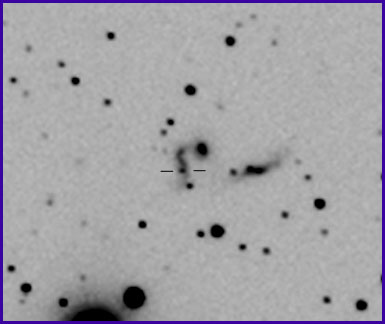 |
SN J05521661+4650211 in MCG +8-11-10 type lc ATEL 7012
Another faint type lc supernova discovered by the Eagle Hill Supernova Search team on January 23, 2015. This discovery sits in the easternmost galaxy of the triplet designated MCG +8-11-10. Many thanks to Lina Tomasella (Padova-Asiago Group) who, despite challenging circumstances, obtained this supernova's spectrum with the 1.82 meter Copernico Telescope. Distance to MCG +8-11-10 is about 300 million light years.
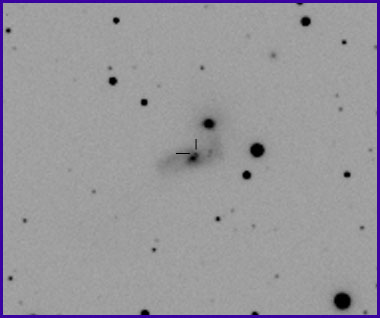 |
SN2014dj in NGC 317B type lc CBET 3993
The Eagle Hill Supernova Search team made this discovery of a faint type lc supernova on September 24, 2014. NGC 317B is part of a galaxy pair (with NGC 317A) - distance about 240 million light years. The classification spectrum was obtained with the Asiago 1.82 meter Copernico Telescope. Note: The plotted position of an earlier type II supernova (SN1999gl) discovered in this galaxy is very close to the position of SN2014dj.
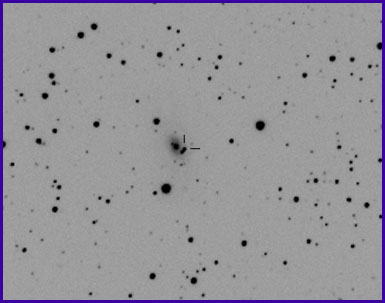 |
SN2013ga in UGC 11895 type la CBET 3704
This Eagle Hill Supernova Search Project discovery was made on October 19, 2013 by Doug Rich, Thomas Harvey, Michael Marion, Joe Rosebush. and Charlie Sawyer. UGC 11895 is a face-on spiral galaxy that sits in the southwestern corner of the constellation Lacerta, the Lizard - distance is about 200 million light years. The confirmation spectrum was obtained with the FLOYDS robotic spectrograph and the 2 meter Faulkes Telescope North located on Haleakala, Maui, Hawaii.
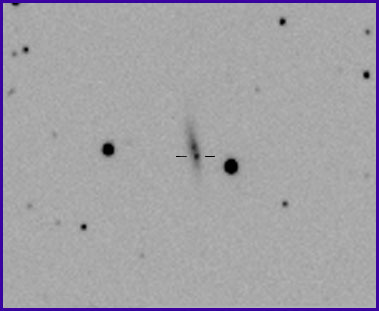 |
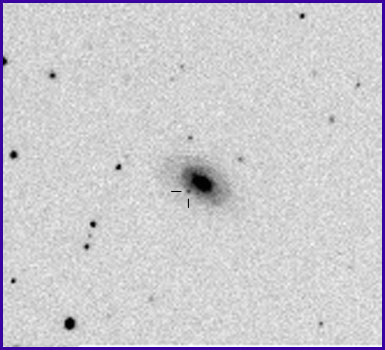
SN2013cd in UGC 4294 type la CBET 3514
Another discovery made by the Eagle Hill Supernova Search Project on April 28, 2013. UGC 4294 is an edge-on spiral galaxy that sits in the western part of the constellation Ursa Major. The credit for this discovery goes to Doug Rich, Thomas Harvey, Joe Rosebush, and Charlie Sawyer. The classification spectrogram was obtained with the Asiago 1.22 meter Galileo Telescope.
 |
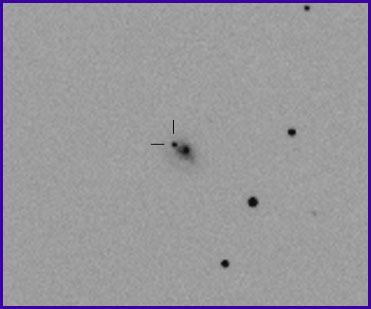
SN2013bl in UGC 4578 type llb CBET 3484
Supernova 2013bl was discovered on April 7, 2013 in the constellation Lynx by Doug Rich, Joe Rosebush, and Charlie Sawyer. It was the first discovery made by the Eagle Hill Supernova Search Project. The classification spectrum was obtained with the Asiago 1.82 meter Copernico Telescope.
 |
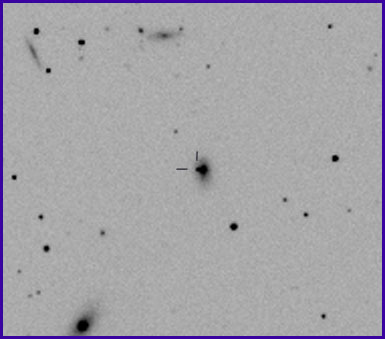
SN2012gm in NGC 7580 type la CBET 3303
This supernova was discovered on November 19, 2012. The follow-up spectrogram obtained on November 21, by Astronomer Paolo Ochner and the INAF team using the Asiago 1.22 meter Galileo Telescope, shows it to be a normal type la supernova, about one week before maximum light.
 |
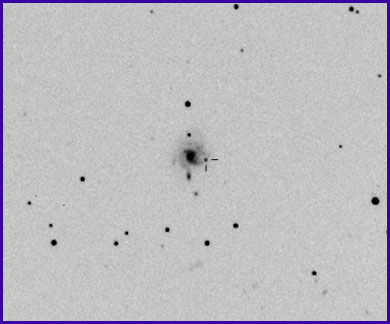
SN2012et in MCG +4-55-47 type la CBET 3227
This type la supernova was discovered on September 12, 2012, a few days before it reached maximum light. It was quickly classified by astronomers and astronomy students from the Institute of Astrophysics of Paris and Paris 6 University, Padova University, Liege University, and the NEON School. The spectrogram was obtained with the Asiago 1.82 meter Copernico Telescope. Also, special thanks to the team at the Italian National Institute for Astrophysics including Andrea Pastorello, Lina Tomasella, and Stefano Benetti - their assistance is always greatly appreciated.
 |
SN2012cs in IC 1129 type llb CBET 3143
This supernova was found near the "bowl" of the Little Dipper in the face-on spiral galaxy IC 1129 - discovery date May 27, 2012. Astronomers used the F. L. Whipple 1.5 meter telescope to obtain this supernova's spectrum.
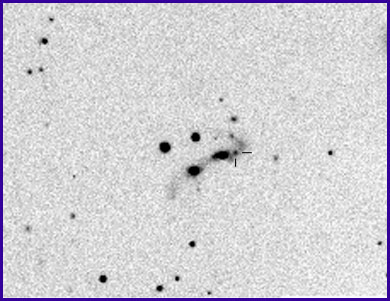 |
SN2012by in UGC 8335 type lI CBET 3095
SN2012by was discovered on April 25, 2012 in UGC 8335 (Arp 238) - a strongly interacting pair of spiral galaxies located in the constellation Ursa Major. The spectroscopic follow-up was accomplished by A. Pastorello and his incredible team of astronomers using the Asiago 1.82 meter Copernico Telescope.
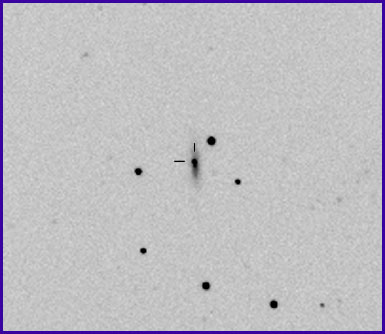 |
SN2012bi in UGC 7217 type la CBET 3067
SN2012bi was discovered on March 21, 2012 in UGC 7217, a spiral galaxy that resides in the Coma Berenices section of the sky, an area rich in galaxies. The optical spectrum was obtained with the F. L. Whipple 1.5 meter telescope which is located in southern Arizona.
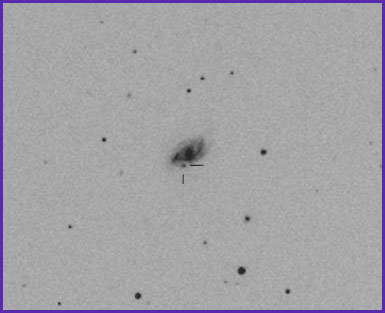 |
SN2012ai in NGC2755 type II CBET 3029
SN2012ai was discovered on February 20, 2012 in NGC 2755, a spiral galaxy found within the constellation Lynx. The confirmation spectrum was obtained with the 1.82 meter Copernico Telescope located in Asiago, Italy.
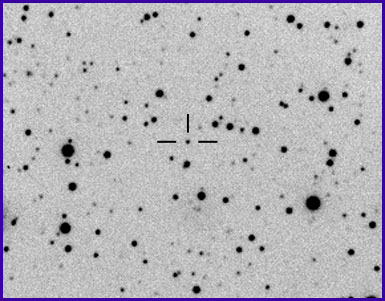
Gamma-Ray Burst GRB 120119A
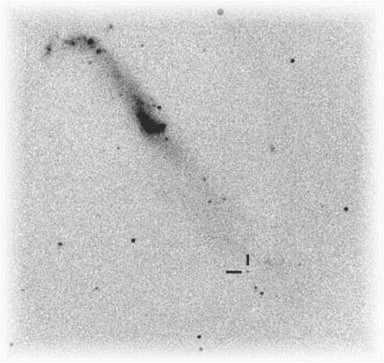
While searching for supernovae on the evening of January 19, 2012 (UT) I received a Gamma-ray burst notice and responded by imaging the target field as quickly as possible. 15 minutes, 25 seconds (925 sec.*) after the burst was first detected by the Swift Space Telescope, I took the above image and captured the optical afterglow of this Gamma-ray burst at mag. 16.6 (R mag). Measured redshift of GRB 120119A oa z = 1.73. This Gamma-ray burst is probably associated with the explosion of a very massive star ( in a very distant galaxy) which occured well before our sun was born! *time includes my 35 sec. exposure.
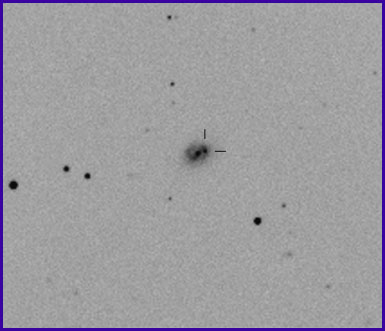 |
SN2012C in NGC2926 type Ic CBET 2979
SN2012C was discovered in Leo galaxy NGC 2926 on January 4, 2012. Spectra of this supernova were obtained with the 2.5 meter Isaac Newton Telescope (Canary Islands) and the 6.5 meter MMT Telescope (southern Arizona).
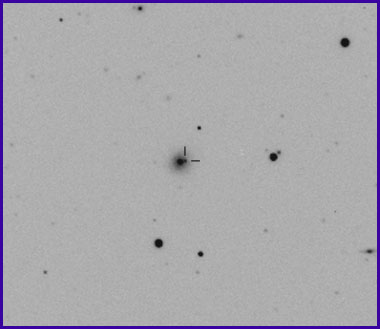 |
SN J12565170+2629167 in IC 835 type lb/c
This supernova was discovered on April 7, 2011 in IC 835, a distant Coma Berenices galaxy. The spectrum of this transient was obtained with the 10 meter Keck I Telescope. Special thanks to the Palomar Transient Factory and the Weizmann Institute for confirming this supernova.
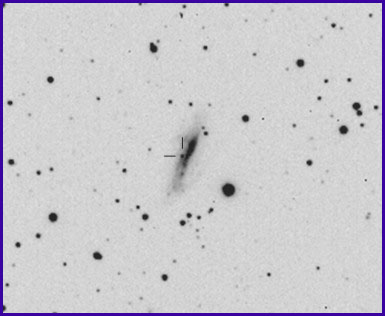 |
SN2010jj in NGC812 type IIn CBET 2530
SN2010jj was discovered on November 3, 2010 in NGC 812, a peculiar spiral galaxy in the constellation Andromeda. The verification and classification spectrum was obtained with the 10 meter Keck I Telescope on Mauna Kea, Hawaii.
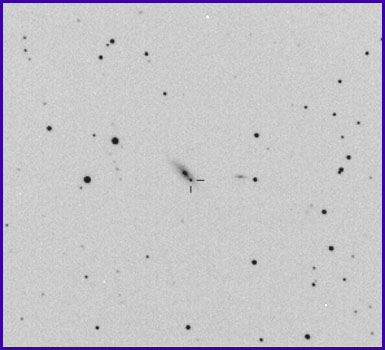 |
SN2010al in UGC4286 type lbn* CBET 2207
Discovery date March 13, 2010 - Spiral galaxy UGC4286 sits in the constellation Cancer, a little WSW of the Beehive cluster. This supernova's progenitor may have been a Wolf-Rayet star. Spectra were obtained with the Las Campanas Observatory 2.5 meter Du Pont Telescope and the 200 inch Hale Telescope at Palomar. Astronomers also used the Hubble Space Telescope , the Swift Space Telescope, and the Very Large Array to observe SN2010al. ATEL 2491, ATEL 2513, ATEL2532 *massive stars exploding in a helium-rich circumstellar medium - most notable SN2006jc
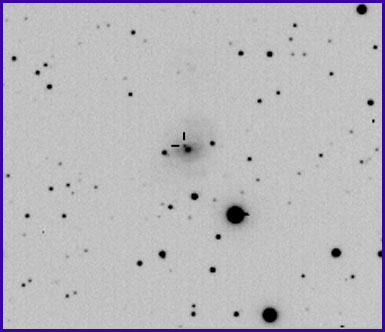 |
SN2010X in NGC1573A type lc or type .la? CBET 2166
This supernova was discovered on February 7, 2010 - NGC1573A is a face-on spiral galaxy that lies in the circumpolar constellation Camelopardalis - distance about 200 million light years. The confirmation image was taken by Paul Burke at Burke's Observatory. The initial optical spectrum (MDM Observatory 2.4 meter Telescope) indicated that SN2010X was a stripped-envelope core collapse supernova similar to SN1994I - a type lc. Even at late times the spectra of these two supernovae were closely matched. However, this supernova's unique spectral characteristics and rapid fading pointed to a possible rare type .la (point one A) event similar to SN2002bj. The explosion mechanism of this unusual supernova type involves a carbon-oxygen white dwarf star and a lower mass white dwarf - dubbed .la because it is one-tenth as bright as a la supernova and fades in about one-tenth the time. Papers on SN2010X: "A Supernova Surprise", Rapidly Decaying SN2010X , Rapidly Fading Supernovae from Massive Star Explosions.
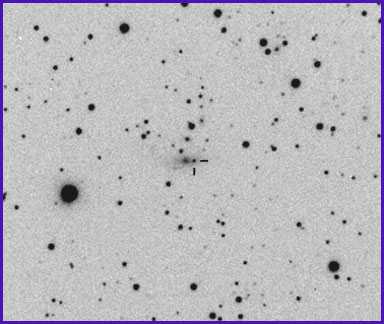 |
SN2009lb in UGC 2944 type IIP CBET 2014
Discovery date November 12, 2009 - UGC 2944 is a small, faint, spiral galaxy that sits in the star-rich region of Perseus - Distance approximately 250 million light years. CFA spectrum

 |
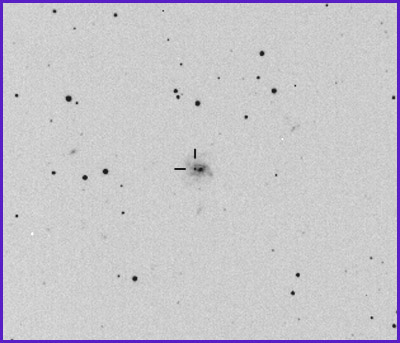
SN2009gh in MCG +12-18-2 type IIP CBET 1850
Discovery date June 17, 2009 - MCG +12-18-2 is a Sb spiral galaxy in eastern Draco. Spectra of this supernova were obtained with the F.L.Whipple Observatory 1.5 meter , MDM Observatory 2.4 meter and Dominion Observatory 1.8 meter telescopes. PSSS spectrum
 |
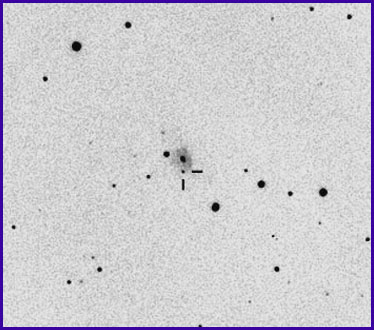
SN2008ev in UGC10155 type II CBET 1468
First supernova found with the Meade 16" OTA - discovery date August 9, 2008. The confirmation spectrum was obtained with the 2.5 meter Nordic Optical Telescope (NOT). UGC10155 is located in the constellation Corona Borealis close to the Hercules border.
 |
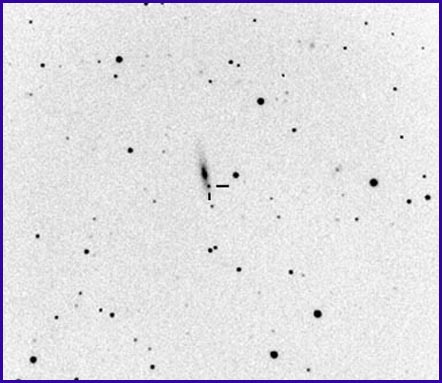
SN2006sr in UGC14 type la IAUC8784
 |
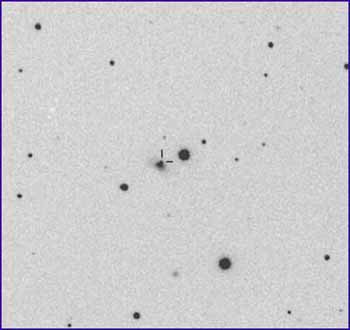
SN2006O in UGC633 type II IAUC8662

 |
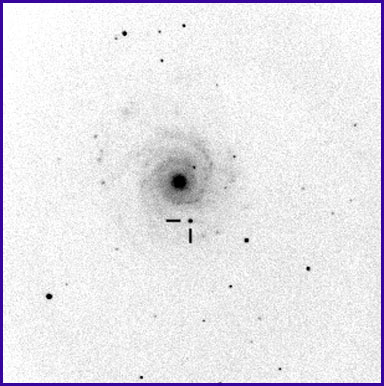
SN2005bx in MCG +12-13-19 type IIn IAUC8521
Discovery on April 26, 2005. MCG +12-13-19 is located in western Draco . SN2005bx was observed by the Chandra X-ray Observatory on July 30, 2005. ATEL475
 |
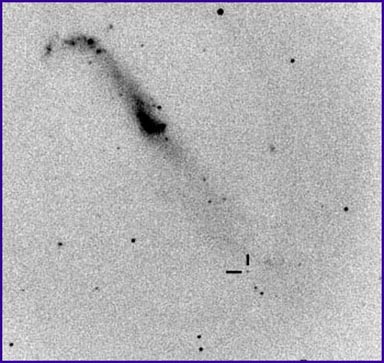
SN2005ay in NGC3938 type IIP IAUC8500
Discovery made on the evening of March 27, 2005. NGC3938 is located just below the "Big Dipper" in Ursa Major. Spectra of this supernova were first obtained with the Calar Alto 2.2-m telescope (southern Spain) and the 200 inch Hale telescope at Palomar. SN2005ay was observed in ultraviolet light by the GALEX Space Telescope on April 2, 2005. NUV-optical- IR composite image of NGC3938 and spectra of SN2005ay ATEL448
SN2005ay was imaged by the Hubble Space Telescope on December 11, 2007.
 |
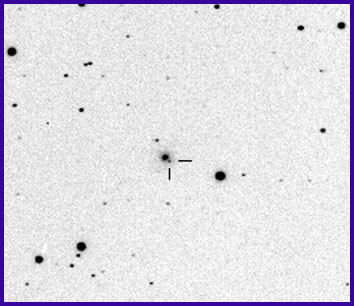
Super Outburst of Luminous Blue Variable in NGC4656 IAUC8497
This LBV was discovered March 20, 2005. NGC4656 is located in constellation Canes Venatici. Classification of subluminous (peculiar) supernovae can sometimes be difficult. In some cases, these "low-power" exploding stars may actually be super-outburst events of Luminous Blue Variables and not true supernovae (SN1997bs, SN1999bw). The spectrum of this LBV was obtained with the Telescopio Nazionale Galileo (TNG) telescope located on the Canary Islands.
 |
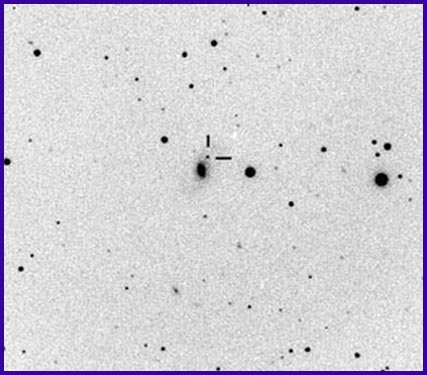
SN2004gx in UGC12663 type II IAUC8459
This discovery was made on the evening of December 30, 2004 with the Meade 12" OTA, Paramount ME, and ST9XE combination. UGC12663 is located inside the "Great Square of Pegasus".
 |
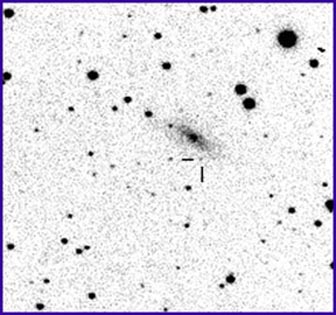
SN2003dw in UGC10548 type la IAUC8124
My third discovery on April 26, 2003 was the first made with the Meade 12"OTA, Paramount ME mount and ST-9XE camera combination. UGC10548 is a barred spiral galaxy located in the constellation Draco. CFA spectrum

 |
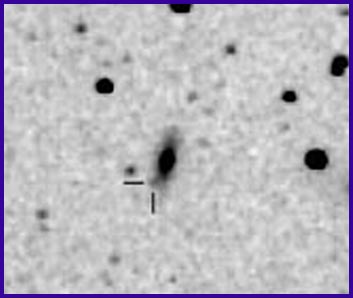
SN2003O in UGC2798 type II IAUC8055
This discovery on January 18, 2003 was made with my 10" LX200 and ST9XE camera. The image is "noisy" because of a full moon rising. UGC2798 is in the constellation Perseus. The confirmation image was taken by Michael Schwartz with the 32 inch Tenagra II telescope which is located in southern Arizona.
 |
SN2000cz in IC1535 type II IAUC7470
My first discovery on July 24, 2000, was captured with a Meade 10" LX200 and ST-6 camera. Because of problems with the verification process, I did not receive credit for this discovery.